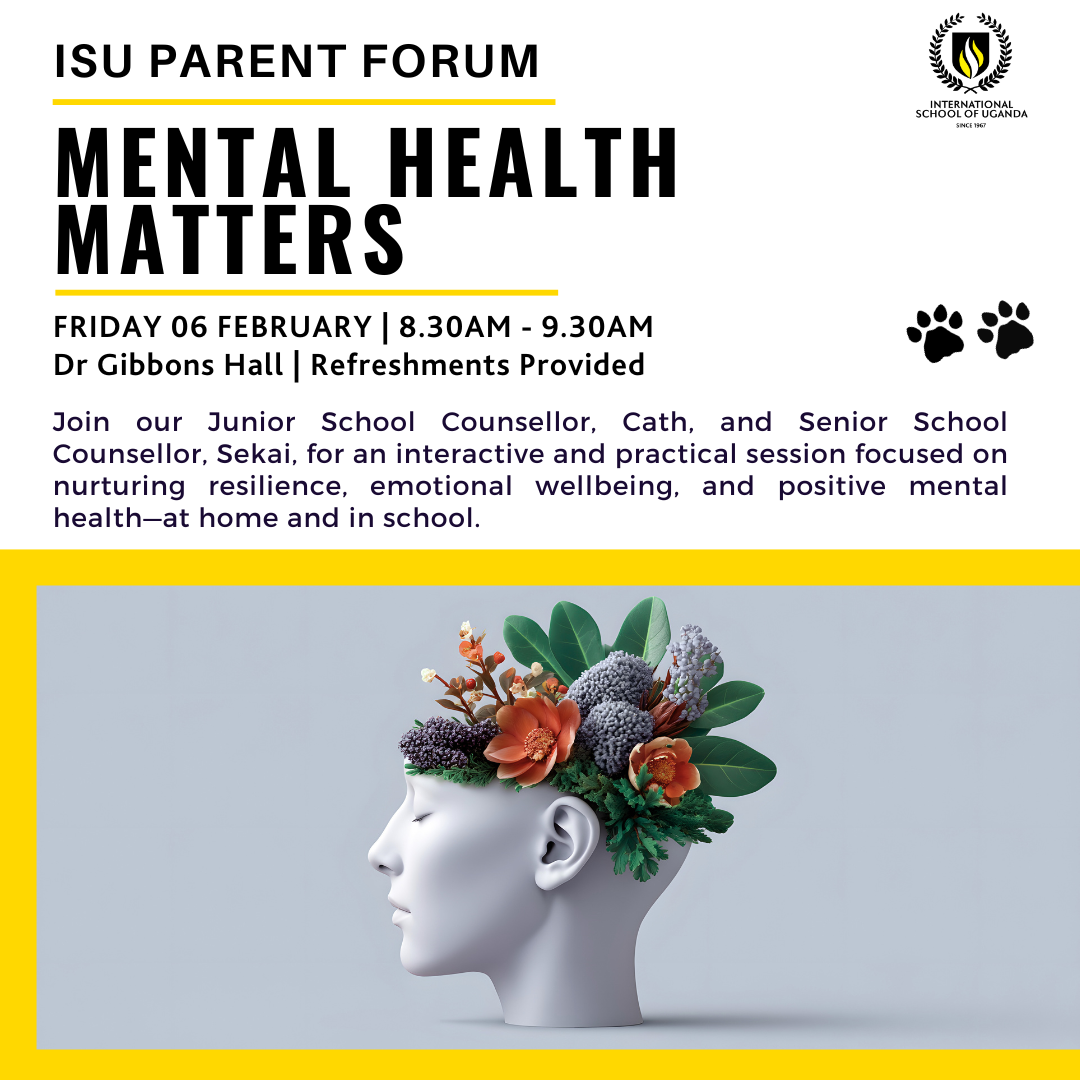







On Friday 6th February, 34 parents attended our Parent Forum, Mental Health Matters, facilitated by our Counsellors, Cath and Sekai. The session provided a space to explore mental health, resilience, and emotional wellbeing for both children and adults.
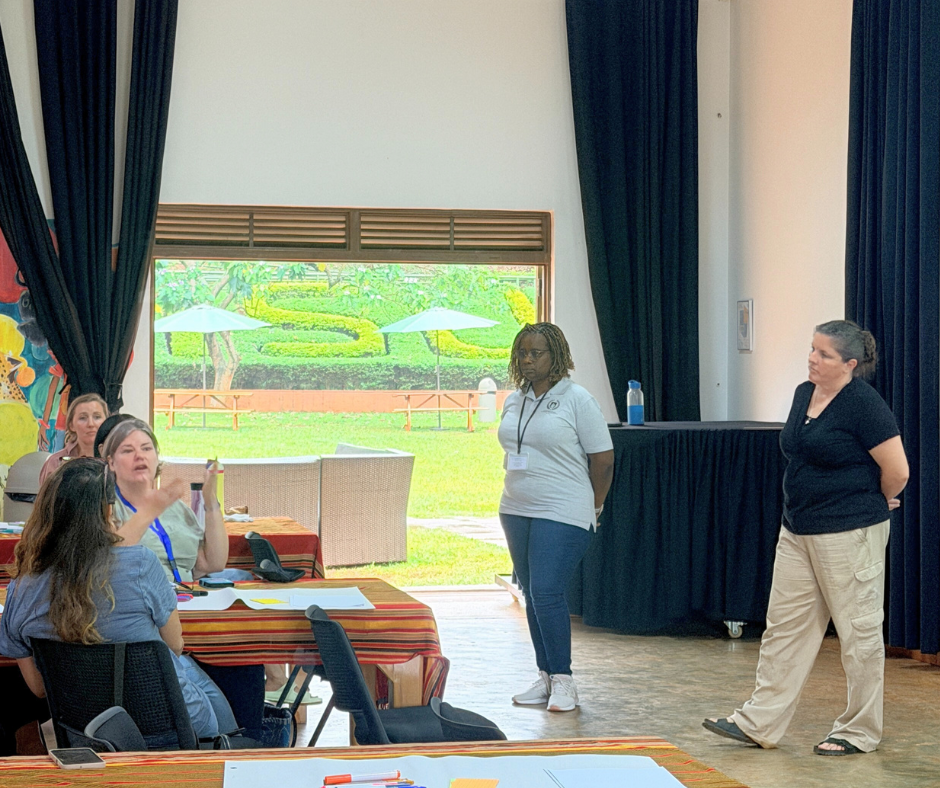
Understanding Mental Health
The forum began with a short survey asking parents what counsellors do and what mental health means. Parents shared that mental health relates to overall wellbeing, including how we manage relationships, stress, and challenges at home, school, and work.
Cath highlighted key research from the National Institute of Mental Health:
- 1 in 5 children experience mental health challenges
- 50% of lifetime mental health conditions begin by age 14
- 75% begin by age 24
- Early support makes a lasting difference
Reflecting on Challenges and Resilience
Parents took part in a reflective group activity, sharing personal experiences of challenge, the strengths they demonstrated, and how they coped. This led into a discussion on resilience - the ability to bounce back, adapt to stress or adversity, and grow through challenges. Parents reflected on how important it is to allow children to experience challenges so they can develop coping skills, even when this feels difficult.
Parents explored the building blocks of resilience:
- Connection
- Competence
- Character skills
- Coping skills
.png)
Parents also shared differences between how they and their children manage challenges, noting that many adults were not explicitly taught about mental health or resilience and are learning alongside their children.
Practical Strategies and Emotional Understanding
Cath and Sekai shared practical strategies for building resilience at home, including modelling resilience, reframing failure, encouraging problem-solving, celebrating effort, creating safe risks, and building support networks.
The forum also explored emotional understanding, with the reminder that all emotions are valid and serve a purpose. Cath shared that emotions such as anger often mask other feelings underneath, such as embarrassment or sadness.
Taking It Home
To conclude, parents were encouraged to create a family emotion check-in, using a simple chart with 5–8 emotions displayed at home. Family members can use the chart to indicate how they are feeling, without judgement, to promote awareness, connection, and open communication.
.png)
Pillars of Emotional Wellbeing
Following this, Cath and Sekai shared the five pillars of emotional wellbeing—expression, regulation, connection, movement, and rest—and introduced the idea of developing a coping strategies toolbox. Parents explored a range of coping strategies, including physical, creative, social, mindful, and cognitive approaches, to support children in managing their emotions and wellbeing. Following this, parents were encouraged to develop a Calm-Down Kit with their child in which they choose items (stress ball, favourite photo, journal, breathing guide card etc) that will help them feel better.
.png)
A Part 2 of this session will be held on 6th March to continue the conversation and learn together. You can view today’s Parent Forum slides at this link.
Join us for our next Parent Forum on 20 Feb that explores how culturally responsive pedagogy shapes our teaching and learning.
.png)
#ISUParentBlogs #ISUParentForum

.png&command_2=resize&height_2=85 "Culturally Responsive Pedagogy Part 1")
.png&command_2=resize&height_2=85 "AI Ethics in Education")
.png&command_2=resize&height_2=85 "AI Safety in Education")
.png&command_2=resize&height_2=85 "AI Literacy in Education")

.png&command_2=resize&height_2=85 "Next Level Listening")

.png&command_2=resize&height_2=85 "Challenge Series: Service Learning")