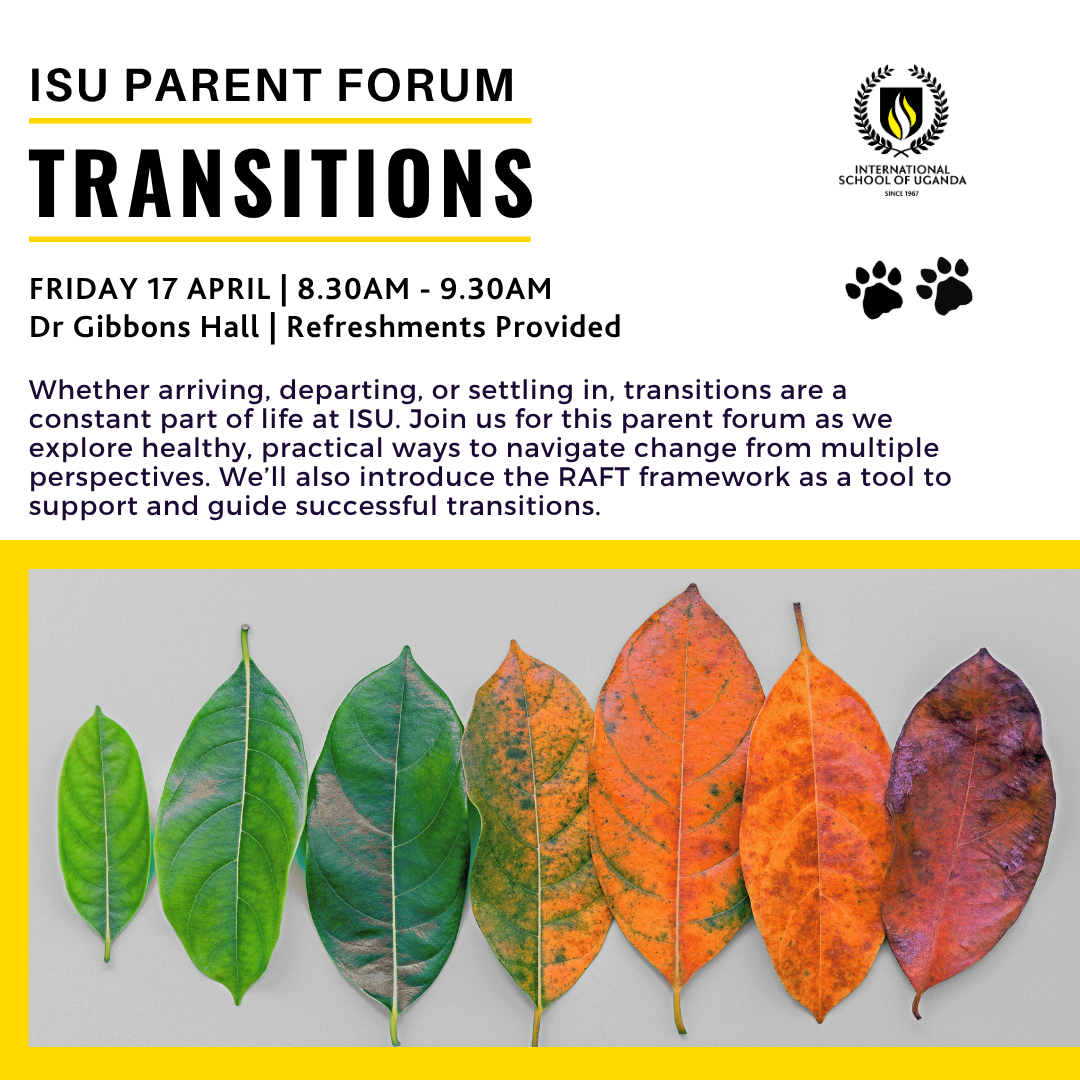







Led by our JS and SS Counsellors, Catherine Gitau and Sekai Chitaukire, this forum began by responding individually to a range of prompts about transition:
.jpg)
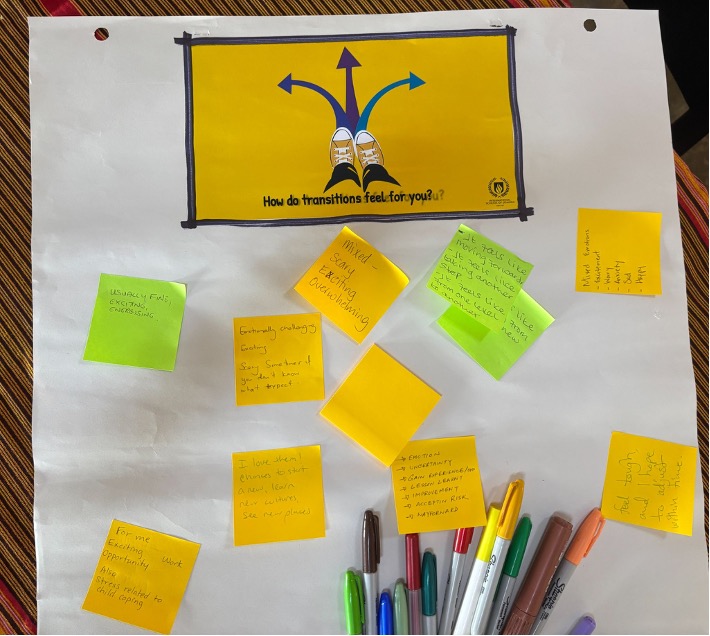
- What do transitions feel like for you?
- Thinking back, which transitions have been easy or hard for you?
- What transitions are coming up for your family?
- What transitions are coming up in your home?
- What transitions are coming up at/related to school?
Participants added post-its to each prompt and looked at each other's responses.
Circle Time
We then engaged in a circle - a practice used at school where each member of the circle has an opportunity to contribute in turn, in response to prompts designed to build safety and trust, responsibility, connection, ownership and belonging.
For this circle, the prompt was “What did you notice about the responses?
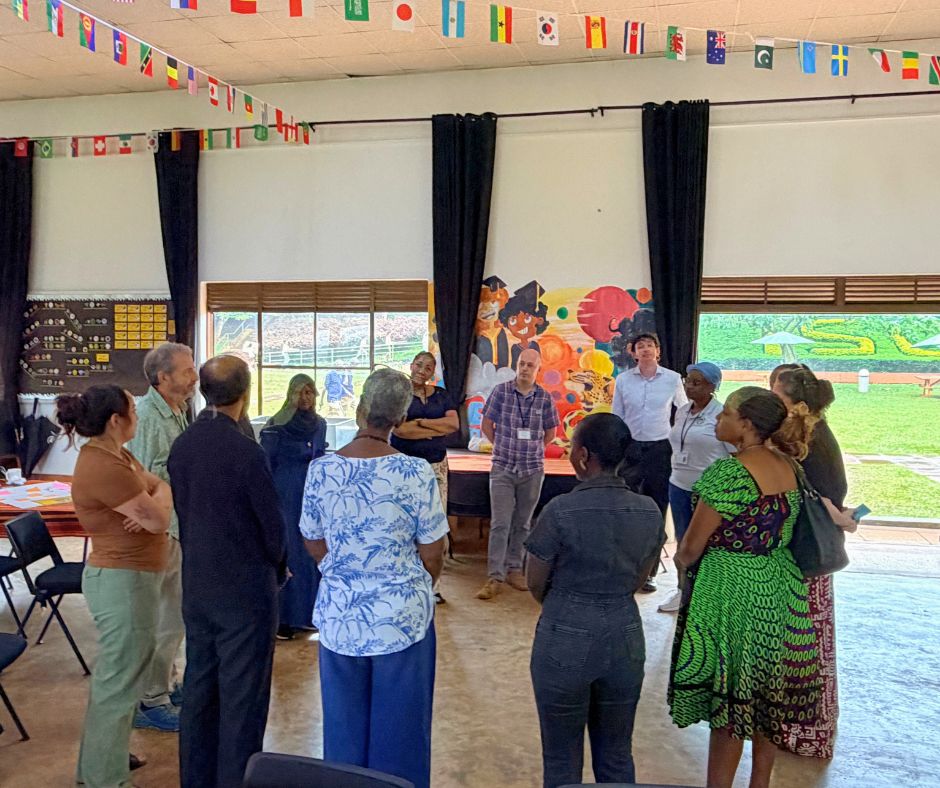
As the Talking Piece was passed around the circle, participants shared their noticings, including: everyone is going through something; the wide variety of transitions big or small that people experience; transitions are a part of life; feelings around transitions can be complicated; acceptance and moving on is important; we should acknowledge the complex feelings around transition and be kind to ourselves.
The 5 Stages of Grief
Sekai shared that the 5 stages of grief are experienced by those going through significant transitions, and these affect people who stay, as much as those who are moving on.
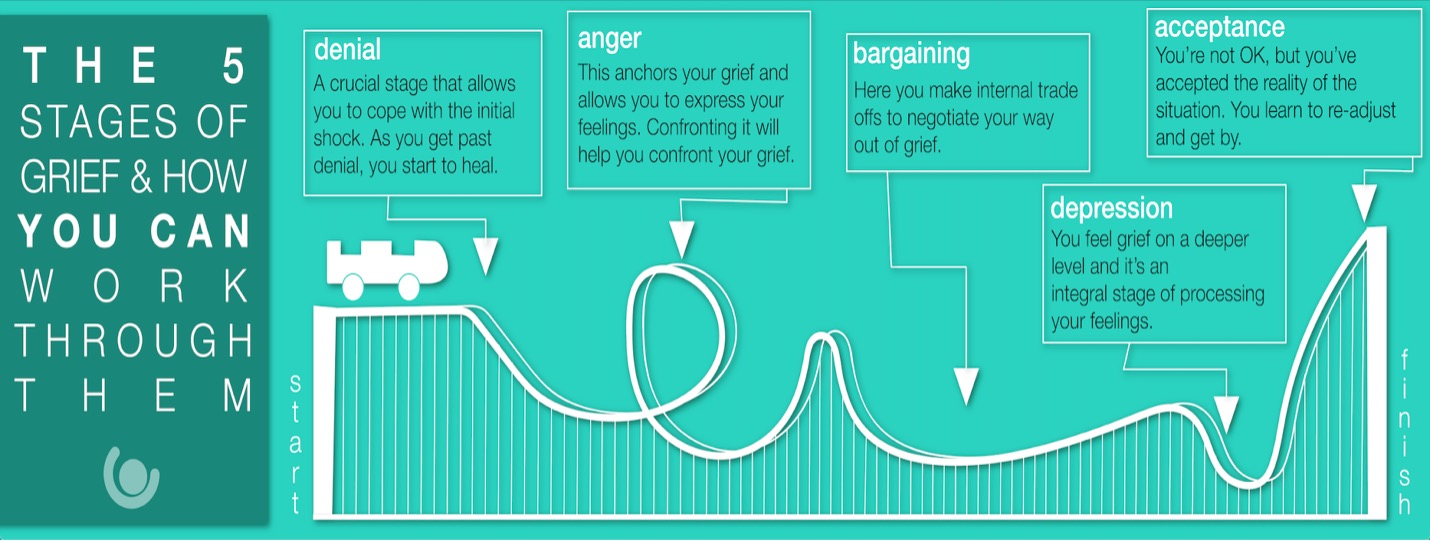
We explored different ways individuals respond to change, particularly the idea of being a “pre-griever” or a “post-griever.” Pre-grievers tend to prepare for transitions in advance by organising and processing their feelings early, while post-grievers may only fully experience and process their emotions after the change has occurred. Recognising these different approaches can help individuals better understand themselves and others during times of transition.
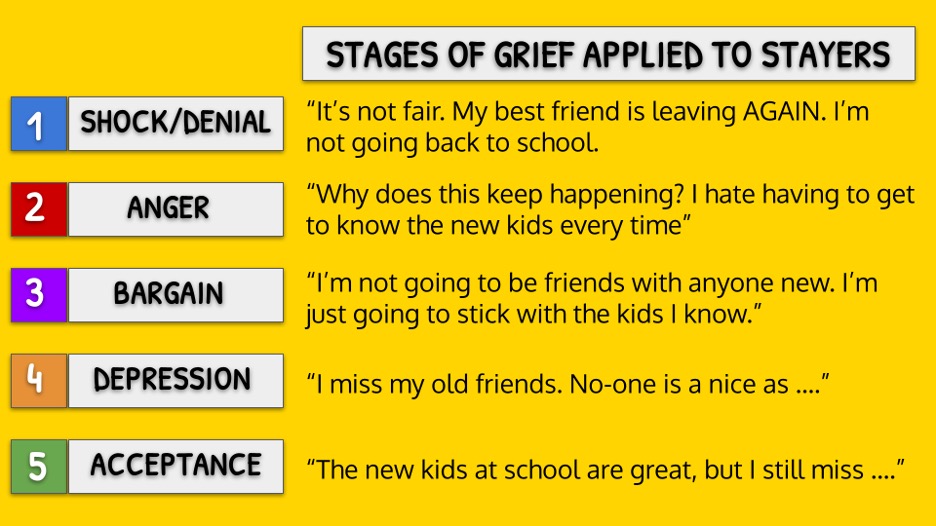
We also discussed the experiences of “leavers” and “stayers.” While support has traditionally focused on those leaving, research highlights the significant emotional impact on those who remain—members of the community who experience repeated goodbyes. Supporting “stayers” is recognised as an important part of building a caring and connected school community at ISU.
As all attendees identified as “stayers,” the discussion centred on how the stages of grief may present for those remaining, and how we can better acknowledge and support these experiences within our community.
NEST Framework
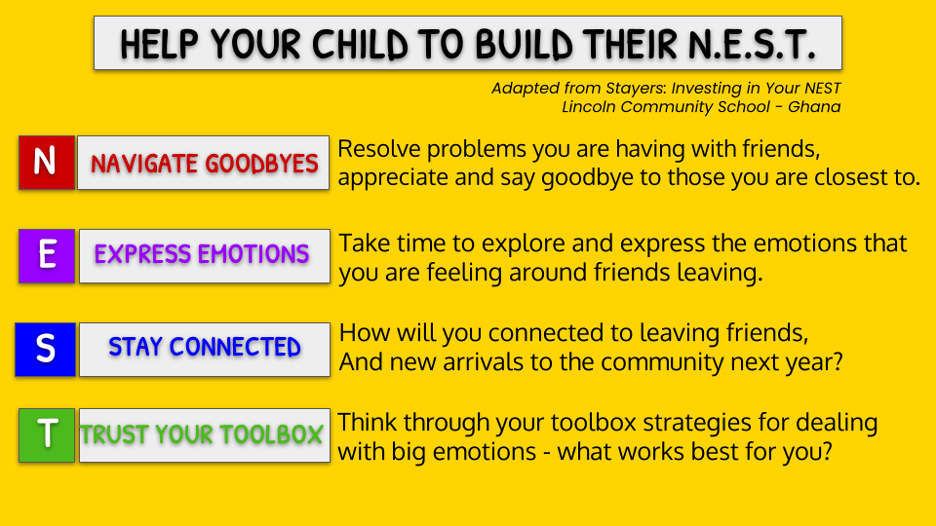
Catherine talked us through the experiences, thoughts and emotions our children who stay will work through. She then shared the NEST framework to help children develop strategies to work through the stages of grief when friends are leaving.
Sekai shared some suggestions for supporting conversations with your child going through a ‘stayer’ transition. Rather than asking questions like “Are you ok?”, use open-ended questions that allow them to describe their feelings. Validate their feelings, even when negative. Use stories or articles as conversation starters or do an engaging activity. Keep routines as much as possible, and make time to plan for goodbyes (playdates, memory books, contact details).
We were then reminded of what to avoid when supporting our stayers - don’t discount current experience (oh, you’ve/we’ve done this before!); don’t assume all children will react the same way; don’t forget or avoid saying goodbye.
.jpg)
We closed with a circle asking, “what is one thing you will intentionally do for yourself or your family after today?” Many responses included finding time to talk about feelings, reaching out to others for support, and making plans for good goodbyes.
#ISUParentBlogs #ISUParentForum
.png&command_2=resize&height_2=85 "Culturally Responsive Pedagogy Part 1")

.png&command_2=resize&height_2=85 "AI Ethics in Education")
.png&command_2=resize&height_2=85 "AI Safety in Education")
.png&command_2=resize&height_2=85 "AI Literacy in Education")



.png&command_2=resize&height_2=85 "Next Level Listening")


.png&command_2=resize&height_2=85 "Challenge Series: Service Learning")